Some Thoughts on How to Adapt Artemis Fowl
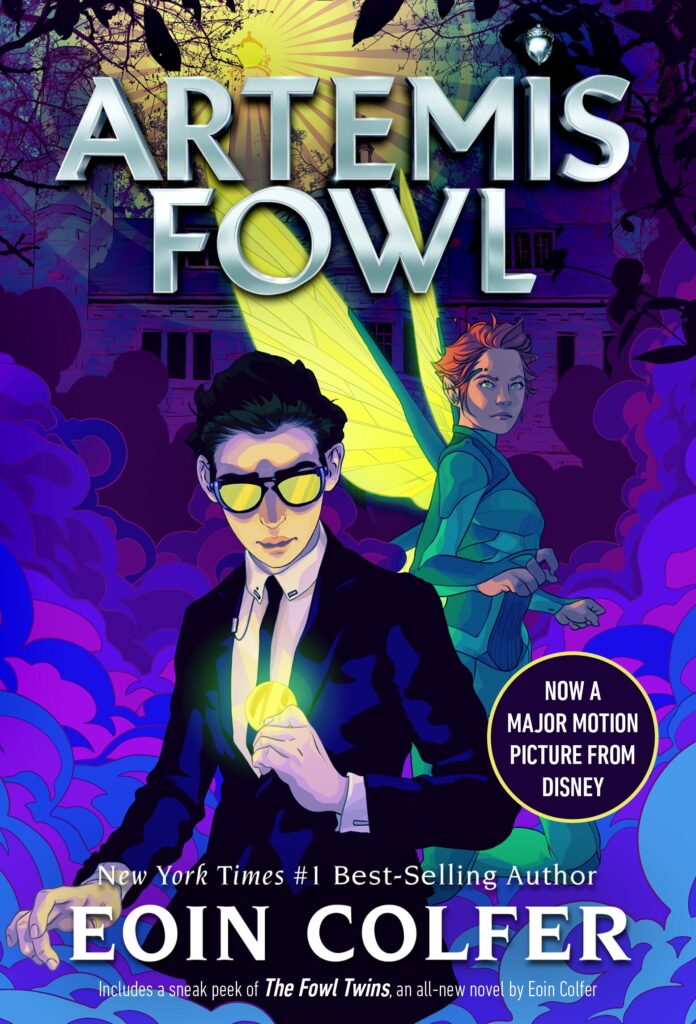
We recently covered Artemis Fowl by Eoin Colfer on the podcast. I was a bit too old for the Artemis Fowl books when they came out in 2001. I was aware of them because I have a sister who is 10 years younger than me. I remember glancing over her copy of the first book and forming a very incorrect impression of what this book would be about. Given Disney’s disastrous live action adaptation, I suspect that I’m not the only one who incorrectly imagined Artemis Fowl as a Harry Potter-like starring a destined magical boy. Now, in fairness, I have not watched Disney’s adaptation. I will not watch Disney’s adaptation. I’m simply not interested in most film adaptations of books, but that’s a conversation for another time. I did, however, watch the trailer for the film. Based on that, I thought it might be interesting to highlight some of the critical elements that I feel any adaptation of Artemis Fowl would need to preserve in order to capture the spirit of the novel.
Who is Artemis Fowl?
Artemis Fowl is a redeemable anti-hero. He is manipulative, arrogant, and reckless with other people’s safety. Artemis Fowl is not an evil character, but he is more than willing to play the role of the bad guy in to achieve his goals. Much of the tension in the latter half of the book comes from wondering how far Artemis is actually willing to go and if his plans might lead to consequences that will push him into true evil.
Artemis Fowl is a prodigy. His intellectual powers far exceed his age, but this is a blessing and a curse. He’s capable of amazing feats of ingenuity and planning, but his ability to outthink adults gives the people around him a false sense of his emotional maturity. Internally, he is a scared little boy whose father is missing in action, presumed dead, and his mother is suffering a complete mental breakdown. He is on his own in the world; surrounded by servants who are looking to him for guidance.
Any adaptation of Artemis Fowl needs to capture both the villainous and vulnerable elements of its titular character, as well as his attempt to use his villainous side as a mask to hide his vulnerable side. This is absolutely critical to what makes Fowl a relatable protagonist. We want him to win, but we don’t want him to win at any cost, as he seems determined to do. The audience wants him to succeed with his humanity intact, and maybe, just maybe, we want him to open up a little and replace the villainous facade with a sincere heroism.
Other characters can be adjusted if need be for the adaptation, but Artemis Fowl’s personal growth is the emotional core of this series. While I would never recommend straying further from the book than absolutely necessary in an adaptation (otherwise, write your own original script…again, a conversation for another time), in this particular book, the other characters can be mostly boiled down to action movie tropes, albeit ones that occasionally come off the page in ways that make us care about them. Fowl’s characterization, though, is non-negotiable and must remain intact.
What is Artemis Fowl?
Artemis Fowl is a book about its titular character attempting to commit a robbery in an absurdist, almost Looney Tunes-like, world filled with action movie tropes, clichés, and a secret underground society of high tech magical fairies. It is a fantasy comedy that draws much of its humor from action movie violence being perpetrated by and against creatures that have more in common with Santa’s elves than Tolkien’s elves. Colfer’s inspirations for the story are clearly more along the lines of Die Hard and Oceans 11 than Harry Potter or Lord of the Rings. The story reminded me very much of of when a cartoons like Tiny Toons do parodies of movies like Sunset Boulevard. It gives kids an accessible version of an interesting story and it also gives parents something to chuckle at, but it can be a fine line to walk.
Colfer does not shy away from violence. Human beings and fairy creatures alike experience serious bodily harm. A character we are very much supposed to like breaks a rabbit’s neck to fake his own death. The absurd and magical nature of the world takes much of the sting out of the violence that would be gruesome if played straight. Life threatening injuries can be healed in moments. Violence against animals and fairy creatures can be turned into a surreal joke. But I commented in our episode on the book that for some of this to work, the reader needs to be willing to calibrate their imagination to a cartoon world. If instead, the reader imagines things a bit more realistically then Butler and Artemis taking the three foot tall Holly captive by force and gaslighting her in a prison cell in Artemis’s basement is…not a great look. In a children’s cartoon where we know there are strict limits to the kinds of evil that will be portrayed on screen, we can feel a bit more comfortable with what’s happening.
For an adaptation, I think this means that the safest and most faithful approach would be to go with animation. Animation allows a greater flexibility in crafting a tone. Violence can be softened or exaggerated to the point of absurdity. I once gave the example of Homer Simpson strangling Bart Simpson.
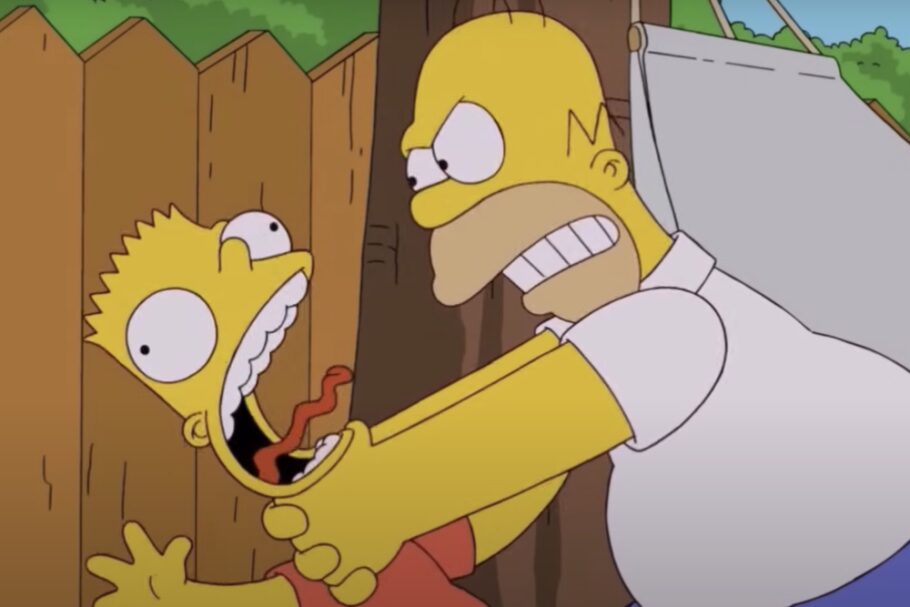
In a cartoon we can laugh at this. In live action, even if it is fake and we know the child actor is safe, watching a grown man wrap his hands around the throat of a 10 year old child produces a very different reaction in the audience. An attempt at live action with Artemis Fowl almost necessitates huge changes to major sequences and set pieces in order to secure a PG rating.
I understand that the Disney movie was live action. It’s a shame that the film rights weren’t picked up by a studio more known for its animation than for its wonderful live action films…
Why is Artemis Fowl?
A question that is not asked often enough when adapting books into movies is: “why adapt this book at all?” There’s a few answers to this question depending on which department you work in at the studio.
The first, and most important to the rights acquirer, is that an adaptation of this property is likely to make more money than was spent on acquiring the rights. Artemis Fowl is a successful series of children’s books with an established fanbase. Other adaptations of similar series have done well. A single successful franchise can be enough to support a studio for decades. The financial risk and reward for an adaptation seem to be in alignment.
The second is that there is some sort of audience demand for an adaptation. There probably was some demand for an adaptation of Artemis Fowl, but children’s media is a competitive and flooded market. I don’t recall ever hearing anyone wishing for an Artemis Fowl movie. I don’t recall ever hearing anyone excited that there was an Artemis Fowl movie coming out. I’ll be honest, I don’t even recall hearing that there was an Artemis Fowl movie coming out. Meanwhile, I can’t avoid news about Harry Potter or K-Pop Demon Hunters. Particularly, I question if there is demand for a live action movie adaptation of Artemis Fowl. Most fan opinions I have read seem to favor an animated adaptation, and I whole heartedly agree.
The third and final reason is that a filmmaker is passionate about the project. Cynical as I am, I think this might have actually been the case. Artemis Fowl is a proudly Irish book. The movie featured a lot of Irish talent both in front of and behind the camera. I think there is real national pride in Colfer for his achievement of producing a globally successful book franchise that specifically utilizes modern and classical Irish culture. I have respect for Kenneth Branagh as a director, but I suspect the blame for the movies lackluster performance is only partially on him.
Some combination of these three answers gives us the answer to why there is an adaptation of this book, but I think in light of the failure we need to ask a second question. Why this adaptation? Specifically, why a live action adaptation of a book that is almost begging to be a cartoon?
I don’t claim to be an expert on the film industry, but it seems to me that Disney has a business strategy that worked incredibly well once. Since the cycle of movies that ended with Avenger’s End Game, Disney has been trying to recreate that success with other properties. With their Marvel properties, Disney created a series of tentpole live action films with the broadest market appeal possible. They then created smaller and cheaper projects that extended the money making potential of their characters and titles. As time has gone on, it seems like Disney captured lightning in a bottle and that the ability of a film franchise to achieve that level of market dominance is unlikely to happen again. While they rarely flop (though in this case they absolutely did), Disney has yet to succeed on such an epic scale since.
They attempted to recreate the formula with Star Wars to mixed results. I believe they had dreams of their own Harry Potter with Artemis Fowl. Animated features can be enormously successful and were Disney’s bread and butter products for a long time, but Artemis Fowl isn’t that kind of cartoon. It’s target demographic is not young children and families. Like Harry Potter, Artemis Fowl is more aimed at a preteen audience that may foster a nostalgia for the stories into their teenage years. Artemis Fowl deserves the kind of animated adaptation that Sony has pursued with Into the Spiderverse and more recently K-Pop Demon Hunters. Disney may be more receptive to making that sort of film in 2026, but in 2020, I suspect they had yet to learn their lesson. Unfortunately, the live action format could not accommodate the tone that Artemis Fowl was going for creating changes to the story that disappointed newcomers and readers of the original work.
A secondary consideration may have been the national pride that fueled passion for the project. There may have been a desire to showcase actual Irish locations and to work with as many Irish crew and actors as possible. An animated project would almost certainly have required a large portion of the work to be outsourced overseas.
Conclusion
To successfully adapt Artemis Fowl I think there are three key ingredients: that the character of Artemis Fowl stays true to Colfer’s vision, that the tone of the project remain light and humorous with a small edge of action movie violence, that the adaptation prioritize transferring the essence of the story to another medium over external desires such as money, content, or glory. I have heard rumors that Disney is not finished with the property yet, but this time they are attempting Artemis Fowl as an animated series. This seems like a step in the right direction. Maybe they’ll get it right this time.