Some Thoughts on Snow Crash by Neal Stephenson
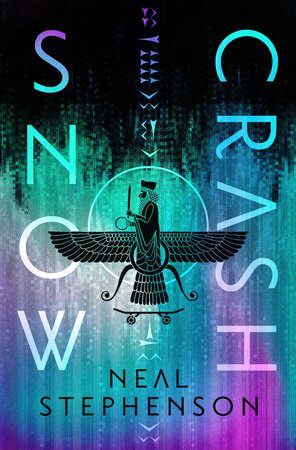
Snow Crash by Neal Stephenson was one of the more divisive cyberpunk books we’ve covered. While the book’s core themes remain relevant and interesting, the style, characters, and execution were, at times, painfully dated. For many of our listeners, the deeper themes that pulled from real academic theories were lost in the wash of “cringey” 90’s nonsense that they were wrapped in. It can be difficult in an unscripted podcast (that also has the burden of summarizing the book) to cover some of these things in as much detail as I would like. In this post, I’m going to take a deeper look at some of the themes and underlying ideas that I think secured Snow Crash’s place in the Cyberpunk canon.
Surface Level – The Metaverse and Capitalism
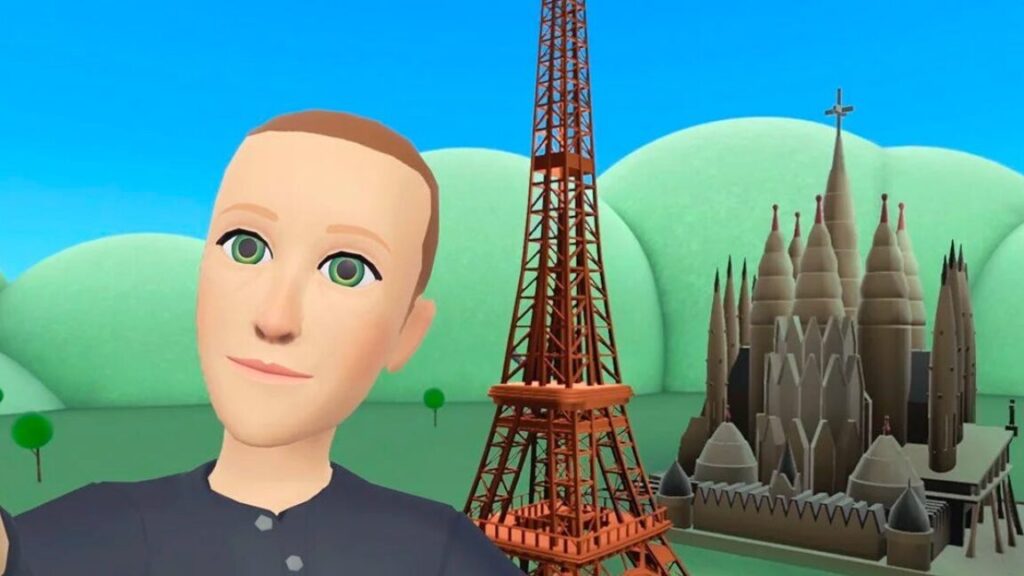
Most internet articles on Snow Crash will tell you that it popularized the term “Avatar” for the image or form representing a user in a digital world. It also coined the term “Metaverse” which Mark Zuckerberg just kind of stole, I guess, for his failing Second Life reboot. These articles will point to Stephenson’s depiction of unchecked capitalism, resulting in corporations with all the powers of sovereign nations, hyper-inflation, libertarian enclaves, etc. I’ve even seen some praising his prediction of cryptocurrencies replacing the dollar (which they have not and will not ever do. Fight me). We should give credit where credit is due, Snow Crash does at least mention all of these things, but I think these are surface level observations that fail to get at the meat of the book.
First, depictions of capitalism-run-amok are a dime a dozen in Cyberpunk genres. The observation that corporations are slowly usurping the power of nations was hardly revolutionary, even in 1992. Stephenson’s depiction of hyper inflation is cartoonish. Literally, I believe he intends it as a joke. His cryptocurrency is not much more sophisticated than Gibson’s New Yen. As nations collapse, so to does the value of their fiat currency. It’s logical that some new medium of exchange would replace them. He (and crypto-bros) make no good arguments for why that medium of exchange should be crypto. It’s just a futuristic sounding idea that he thought he would stick in his sci-fi novel. To be honest, it would be noteworthy if he wrote a “cyberpunk” novel that didn’t have these things. Critiquing laissez-faire capitalist policies is, as my corpo-overlords would say, “table stakes,” for a cyberpunk novel.
Stephenson’s Metaverse was probably more interesting in a time when virtual reality experiences were still novel and exciting. Though I will give him this, Stephenson’s predictions about what VR were maybe too accurate. His Metaverse is only marginally more functional than the one Mark Zuckerberg created. It has a little more of a Ready Player One vibe, but it seems more or less like a version of what we have now. Unfortunately, we have learned that, while this technology does seem cool at first glance, the novelty wears off pretty fast. It turns out that leglessly teleporting from place to place isn’t as engaging as just getting up and walking. But, I must admit, there is something compelling about Stephenson’s optimism for the technology’s “cool” factor. This brings me to my next point.
Underneath it All – The 90’s Aesthetic
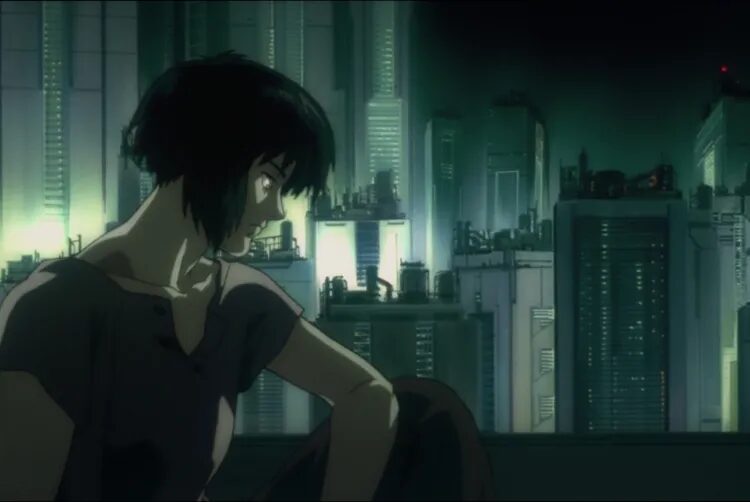
Diving past the surface, we find that while his world may not be a masterful critique of socio-economic conditions, he did manage to capture something that is much more difficult to quantify than run-away inflation: The 90’s Aesthetic. I try to avoid waxing nostalgic to the extent that I am able, but there was a certain quality to media in the 90’s that hasn’t yet been reproduced. Technology was good, but not too good. People had the benefit of more-or-less modern tools, but the human touch was still visible in everything they made. Algorithms hadn’t yet rounded the ugly corners off of mainstream art. A lot of weird, experimental stuff was getting made with the emerging tech. It was a golden age of indie comics, cartoons, and movies. To be honest, the music was a little cheesy, but even that had a kind of charm. Over it all, the millennium loomed large. Society was braced for change. While the 1900’s were the age of the electricity, the automobile, and the appliance, many foresaw that the 2000’s would be the age of broadband, big data, and automation.
Stephenson was writing in a time when the internet was well into its commercial phase, but still predominantly in the hands of early adopters. Those early adopters tended to be into other weird, experimental things. Artists in the Cyberpunk movement imagined all of the ways that exposure to information technology might change humanity, but they were less prescient when it came to imagining how exposure to humanity might change information technology. These punks did not realize that they were living through what was, in my opinion, the golden age of the internet.
I’m not saying that the internet hasn’t improved since the 90’s. Certainly the internet of 2026 is technically much better than the internet of 1996, but widespread adoption of the technology obliterated the hacker subculture of the early adopters. The world the Cyberpunks imagined was, well, punk. It was a hustle. It was indie. It was underground. I’ve written about this before, and so I won’t belabor the point, but I think the enduring popularity of the Cyberpunk genre has as much to do with a longing for a different kind of internet culture on the part of youngsters as it does with nostalgia on the part of old heads.
Stephenson’s kowabunga-skateboard-girls and muscle-car-driving-samurai-pizza-boys have become archetypes of what, in 2026, is a kind of retro-futurism. For example, the Fallout franchise imagines the future from the perspective of the 1950’s, Cyberpunk 2077 draws on things like Snow Crash and Neuromancer to imagine the future from the perspective of the 1990’s. This aesthetic remains popular. In fact, Cyberpunk may be more popular now as a retro-futuristic genre than it was in its own time as dystopian sci-fi. That is, at least in part, thanks to the new internet’s ability to connect people to others with similar interests all over the world.
But as with all retrofuturism, it takes what it likes and ignores what it doesn’t. Snow Crash, as a product of its time, brings with it all the baggage of its time. It’s edgy in ways that haven’t aged especially well. There’s a lot bad writing around women and…uh…girls. I certainly hope Stephenson would rethink the way he wrote YT if he had it to do again in a post-Weinstein, post-Epstein, post-Metoo world. There’s also a few homophobic jokes, but in fairness to Stephenson, they aren’t nearly as bad as he could have gotten away with back then.
All this is to say that I think some of the surface level themes were not intended to be serious critiques, rather he’s simply setting a tone, or a “vibe” as the kids say. It’s “giving punk.” Stephenson doesn’t have much to say about these things. He’s not writing a morality play about the dangers of hyper-capitalism. The hyper-capitalism is just the context. The morality play is about something else entirely.
It was never not the Information Age
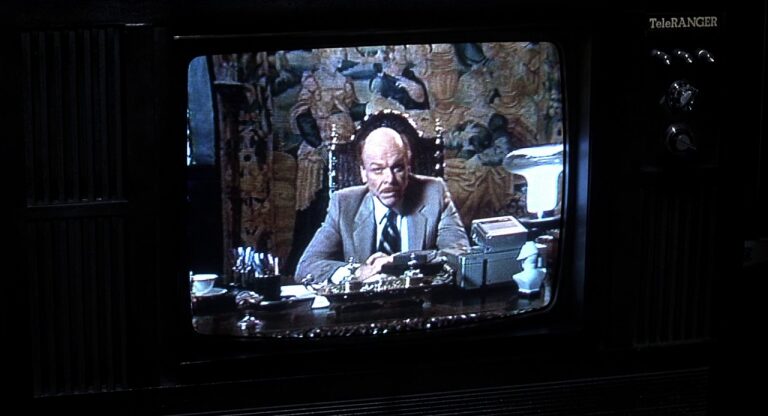
The battle for the mind of North America will be fought in the video arena: the Videodrome. The television screen is the retina of the mind’s eye. Therefore, the television screen is part of the physical structure of the brain. Therefore, whatever appears on the television screen emerges as raw experience for those who watch it. Therefore, television is reality, and reality is less than television.
-Brian O’Blivion, Videodrome
In my humble opinion, the enduring legacy of Snow Crash is not its depictions of burbclaves and failed Facebook endeavors, but rather it is the titular Snow Crash. Snow Crash is a virus. It is both a computer virus, in the sense that it can corrupt the normal functions of software, and it is a biological virus, in the sense that it can corrupt the normal functions of human cells. While I think the logic behind how Stephenson’s Snow Crash works is flawed to say the least (something I discuss at length in the episode), at a broad stroke, he’s suggesting something very interesting and possibly true: It’s all just data.
In 1976, evolutionary biologist, Richard Dawkins (who would later go on to become a bit of a douchebag, but he had a few good ideas) wrote a book called The Selfish Gene. In this book, Dawkins argues that many behaviors and traits that may appear to contradict Darwin’s theory of evolution by natural selection actually begin to make more sense if we look at survival from the perspective of genes as opposed to individual organisms. For example, if a gene were to create a tendency towards altruism, and that altruistic impulse leads to a single carrier of that gene to sacrifice himself to save the lives of multiple carriers of that gene, that gene is likely to be passed on even though it lead to the death of an individual organism, because that death created a higher likelihood of survival for a greater number of gene-carriers. Like Stephenson, Dawkins also draws comparisons between genetic code and human information systems. Dawkins suggests that information systems also have the capacity for evolution through mutation and natural selection (though he may hesitate to put it in those terms). Dawkins argues that as the gene is to D.N.A., so the “meme” (yes, this is where that comes from) is to human information systems.
Stephenson builds on Dawkins’s concept of memetics (yes, that’s a thing). Snow Crash is a virus that is both memetic and genetic. To understand how this can be, we need to understand a key difference between machine minds and biological minds. The human mind is often compared to a computer. Memory, personality, and rationality are often compared to software. Neurons, ganglia, and blood vessels are compared to hardware. This analogy can be useful in so far as it goes, but like all analogies it only points to a truth, it is not itself the truth.
Mechanically, a computer is processing information by manipulating and storing electrical states. A low voltage state is represented by a 0. A high voltage state, by a 1. In a computer, these states comprise the software and the data. The hardware is all of the mechanisms by which these electrical states are transformed and stored. The brain, by contrast, blurs the line between software and hardware. When a human being experiences anything, the structures of the brain change. Electrical impulses are a part of the equation, but unlike in a computer the underlying circuitry is constantly changing. Neural connections are weakened or strengthened in a phenomenon called “neural plasticity.” By reading these words, which exist purely as electrical states given visual shape by your monitor, the underlying structure of your brain has been changed. The non-physical has produced physical change. If we extrapolate…a lot…this means that theoretically the evolution of a meme can impact the evolution of a gene.
“This Snow Crash thing–is it a virus, a drug, or a religion?”
Juanita shrugs. “What’s the difference?”
-Neal Stephenson, Snow Crash
The Snow Crash virus begins memetically. It is information that is designed to hijack the brain’s neural plasticity and alter the consciousness of the infected. I cannot predict how these words I’m writing will change your brain, but I know that if you read them, hell even if you just look at them without understanding them, your brain will be changed. Theoretically, if I understood the brain well enough (and that is a very big “if”), I could craft some sensory stimulus such that it would, when consumed, create a specific neural pathway in your brain. Upon gaining some control over your brain, perhaps I could affect your entire body. This is where the biological component of the Snow Crash virus comes from. A person who has been digitally infected will begin to produce a biological virus in their cells. This can then be harvested from the tissues and blood of the infected and used to make a pharmaceutical version of the virus.
Juanita is an interesting character. In an age when people often claim to be spiritual but not religious, Juanita seems to be the opposite. She is religious, but she doesn’t seem particularly concerned with the supernatural aspects of her faith. Nor is she what we might call a “cultural Christian.” Instead, Juanita almost seems like a character out of Dune. She understands the power of religion. She might even say that she understands the necessity of religion.
Stephenson, through Hiro and Juanita, argues that religion’s original purpose was to act as a repository of information. At one point, Hiro imagines the ancient Sumerian civilization as a single organism. From that perspective, religion and the priest-caste served as both memory and regulatory organs. Like cells in a body using chemicals to communicate, the citizens of Sumer are using language to communicate, and the priest-kings direct their function. Stephenson envisions the Sumerian language as the Ur-language, the original language (this is problematic on many levels, but bear with it for a minute). This language speaks directly to the lower levels of the human brain. It is able to directly shape the brains of the listeners. For the Sumerians, going to the temple and hearing a sermon is literal programming. Priests are able to speak “me (pronounced “may”)” like spells, implanting knowledge and skills directly into the brains of their supplicants. These people move through life robotically, never truly thinking for themselves. That is, until the Babel event.
One day, a man named Enki is born with the ability to create new me. Enki is maybe the first fully sapient person, able to think and reason for himself. The price of sapience seems to be forfeiting the ability to directly receive knowledge and skills through me, instead the individual must learn, understand, and form their own unique structures. That is a price Enki is will to have his people pay. He crafts a me which destroys the power of the Sumerian language to directly alter the underlying structures of the brain. This creates linguistic drift, but ultimately frees humanity from their robotic existence.

The makers of the Snow Crash virus take issue with Enki’s actions. They think that maybe it would be better if the poors were a smidge more robotic. They’ve found a way to recreate the power of me by tapping into the same parts of the brain used by people who practice speaking in tongues. These nefarious wealth-lords are planning to use Snow Crash to destroy hackers and render civilians more susceptible to suggestion. Fortunately Hiro, like Enki before him, is able to come up with an antivirus that nullifies Snow Crash and prevents the evil corporate overlords from infecting everyone.
Stephenson’s linguistics…and his history…and his theology…and his anthropology aren’t great, but again, I think in broad strokes he’s illustrating that the division between the world of information and the “real” world is arbitrary and illusory. Physicist John Wheeler coined the phrase “it from bit.” He theorized that at the very bottom of everything there is a “yes or no” question, a binary choice. The idea that information may in fact be more fundamental to reality than matter has continued to gain traction in theoretical physics since Wheeler’s death.
The most powerful scene in Snow Crash, in my opinion, is when Da5id opens the Snow Crash in the metaverse. There’s a palpable tension in the scene. Da5id is so sure that his anti-virus software is sophisticated enough to handle any malware that this dealer could have slipped him. In the worst case scenario, he might fry his computer, but it would be ludicrous to suggest that mere media could cause him physical harm. The only one who urges caution is the religious Juanita, who accepts that there are possibilities beyond what she can comprehend. Da5id crashes. He never logs back on.
Reality isn’t what Da5id thought it was. He has miscalculated. The notion that there is a line separating his body and the information of the metaverse was an incorrect assumption. It’s all information. Wheeler’s theory of reality coming down to a fundamental binary choice has deep implications. One of which is that we are living in a “participatory” universe, that is, that there is no such thing as a passive spectator observing an objective reality. To observe reality is to create reality. Snow Crash reminds us that information is not passive. It is not objective. It is not safe. When we access it, we change it, and it changes us.
The book conveys this point mostly through a series of convoluted Socratic dialogs between Hiro and an AI assistant. Stephenson doesn’t dwell for very long on these revelations and he intersperses them with over-the-top action sequences and random nonsense. I think that this deeper point about the nature of reality and information is maybe something that Stephenson might not have even known he was making at the time he started writing Snow Crash. I don’t blame readers for missing it. I’m not even sure it’s there. I could have projected this whole thing onto the book. But the book made me think about it, and as a result, I enjoyed the book more than some of our listeners.
So yeah

Snow Crash isn’t a perfect book. In fact, I’d say it’s a pretty flawed book. Despite the flaws, though, I see why it became a classic of Cyberpunk fiction. If you can stick with it, and really ride the wave of philosophical douchebaggery, then there are still some deep and highly relevant themes to be explored. The one thing we can probably all agree that he nailed, though, is that there are definitely entities out there whose wealth has transformed them into a demonic parody of humanity who want to use sophisticated algorithms to rob us of any autonomy or agency.

