A Meditation on The Gifts of Owllúvatar
Content Warning: Conceptual discussion of suicide, death, illness
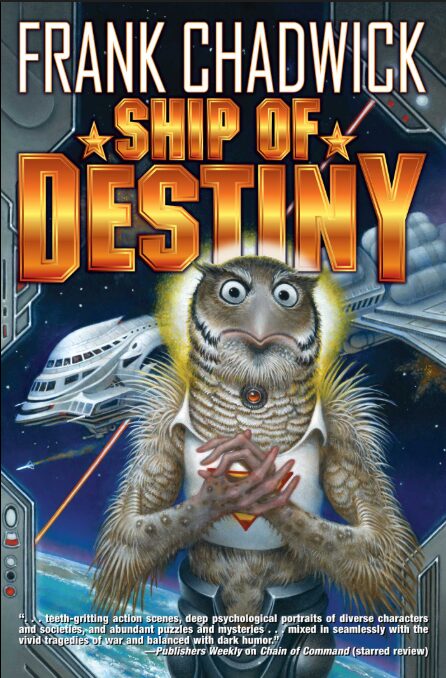
Imagine, if you can, that a humanoid owl creature approached you and offered to give you the strangest sexual experience of your life and/or to make you immortal. As you lay there in post-coital bliss, enjoying your nicotine product of choice (because I know you freaks, and I know you lack Sam Bitka’s integrity), you contemplate seriously the prospect of immortality. As a diligent listener of Words About Books, this isn’t the first time you’ve considered the strange gifts that Illúvatar gave to the race of Men, but it is the first time that an alternative has been within your reach. What do you choose?
It’s not an exaggeration to say that death and decline are as essential to the human experience as birth and growth. We’re among a privileged few animals with the ability to contemplate our own mortality. We maintain a close and complicated relationship with death. Since the dawn of our species, vainglorious men have squandered fortunes and sacrificed empires for the smallest chance at eternal life. In our legends, to join the ranks of the deathless, the Gods, is the ultimate reward for a hero. At the same time, accepting one’s destined and natural death is seen to be admirable and wise. Few, if any, of us will ever become immortal. Many will never even reach that lesser acceptance of death. The bitter and futile struggle against a cruel fate often emerges as a third deathly theme.
You’re lucky, though. You get to decide which theme we’re going to be exploring today. What kind of story are you in? Is this one of the one where immortality represents the greed and pride of cowardly elites who must hoard everything, even life, lest they experience a moment of discomfort? Or is this the story of a hero who has risked all and is rewarded for their selflessness with the ultimate gift? Or is this a story of humility and acceptance of the natural order?
It’s difficult to choose. After all, your entire framework for understanding the problem is based on your experience of a reality where death after about 100 years (if you’re lucky) is an inevitability. All human morality exists within that context. Changing that context changes everything. Existence becomes a choice. Resource aren’t unlimited. Is your consciousness truly so valuable that it deserves to take up space for all eternity?
Speaking of practicalities, what is eternity exactly? It’s difficult to comprehend time on that scale. The Greenland Shark is thought by some to be the oldest living vertebrate with a potential 500 year lifespan. That’s a long time. Long enough to start to wonder what you’d do with all that time. Imagine living through every major war, famine, and plague. I don’t know about you, but I begin to feel a little tired at the thought of having to go on forever. Even if the body remains healthy, it’s been my experience that psychic baggage doesn’t grow lighter over time.
Death is their fate, the gift of Ilúvatar, which as Time wears even the Powers shall envy.
-J.R.R. Tolkien, The Silmarillion
Still, even to me, 500 years sounds better than 100 years. Luckily for us, the sentient (and sensual?) owl is only offering us a kind of functional immortality. This isn’t the gift that Illúvatar gave to the elves, to be bound to this world until its ending. Oblivion, or at least removal to an existence beyond the scope of this physical realm, is still open to us. We are still vulnerable to true death due to misadventure or, what the Japanese might call, 自決 (jiketsu). A morbidly descriptive word made up of the characters for “self” and “determination.” And indeed, your owl friend tells you, many owls have chosen the path of self-determination. They live until they run out of reasons to live and then they stop.
That doesn’t sound so bad. A bit grim, perhaps, but you retain the ability to die and are instead only losing the ability to age. You’ve read numerous cautionary tales about quests for immortality, but while moralists and philosophers may find nobility in the death-state, you struggle to think of a single one who has written convincingly about the nobility of dying. Even if you don’t desire an eternal existence, surely you desire a release from the pain of a slow mental and physical decline.
It’s not an exaggeration to say that death and decline are as essential to the human experience as birth and growth.
I did say that, didn’t I? Death and decline are essential to the human experience. What would it mean to never have to face them and to know that you would never have to face them? Survival is one biological imperative. Reproduction is another. As advanced in intellect as our species is, at the root of all our philosophy, reason, and art are the same biological imperative subroutines that drive the protozoa. To be freed from any one of them changes the equation of not only what it means to be human, but what it means to live.
The owl, she calls herself a “guardian,” has no proper reproductive system. She has all the organs required to enjoy the pleasure of the mating act, but she does not possess those required to pass on her genetic material or to create new life. If a new guardian is required one will be made-to-order.
Freed from most of the bonds of nature, what would become of your personality? You look at your friend in a new light. You carefully examine all that you know of her and her people. They’re unparalleled genetic engineers. Their technology consists almost entirely of self-aware, organic machines. They “uplift” animals into full sapience wherever they go, simply for the convenience of having a society that will provide for their material needs. They see little difference between the sapient citizens and the cognizant machines. All life is technology, and every mind is another tool to be wielded.
There is no passion in this creature before you, except that which you have awoken in her. For hundreds, if not thousands of years, she has drifted. Her only motivation has been to seek out some reason to keep seeking. She has found it, for now, in you. You’re the first sapient creature she has ever encountered that doesn’t have its roots in her peoples’ meddling. You’re new.
You’re surprised by how petty and egotistical she and her people can be. For eternal beings, they show surprisingly little patience. They chafe at every insult. They delight in toying with lesser beings.
She senses your silent judgement and asks what it is that bothers you.
You explain that you associate age with wisdom and that you’re surprised that beings who have been around for so long haven’t moved beyond this shallow pride. She replies that such enlightened ones have existed of course, but they are the least likely to quest across the galaxy in search of reasons to live. It seems to her that nature does not select for enlightenment. The restless survive and those who are at peace fade away.
You don’t want to suffer the pain of old age and bodily decline. Nor do you want an eternity of endless dissatisfaction. What is it that you do want? Peace would be nice. You’re not quite there yet, though. Not quite ready to fade away. But is immortality what you need to reach that place of peace? If you’re honest with yourself, you don’t think it is. If anything it might delay your progress. Knowing you have decades left, you already put off doing the things you know you should. Imagine if you had many hundreds of millennia.
What would be the purpose of surviving all that time? Nothing in the universe is fixed or eternal, not really. Nothing you could build would last. Maybe you could live long enough for dissatisfaction to finally overwhelm the fear of death and peacefully embrace the end at a time of your choosing, but do you really need eternity for that? This guardian has become numb to every kind of atrocity. She’s no closer to peace than she was the day she was born, maybe even further from it than she was before. Maybe some degree of decline and struggle is part of a natural cycle that is necessary for the cultivation of empathy, wisdom, and peace. In all their years, these guardians have only succeeded in making themselves into monsters. They may not age, but their souls still rot.
No, you say at last. You’ll pass on immortality. One year or one million years, it doesn’t really matter. You’re only ever alive one moment at a time, anyway. You prefer peace to endless, clawing desperation. You’ll appreciate your allotted span and try to make a graceful exit when the time comes. You are, however, ready for another round of sexy time, if that’s still on the table.